Introduction
You’ve probably heard the name Karen Read by now. Her case has gripped Massachusetts and captured true crime followers nationwide. But there’s another name that keeps popping up in headlines and courtroom dramas: Brian Higgins.
If you’ve been following this story, you know it’s anything but straightforward. What started as a tragic death of a Boston police officer has spiraled into allegations of conspiracy, cover-ups, and a legal battle that has now spawned a civil lawsuit. At the heart of it all sits Brian Higgins, an ATF agent whose relationship with Karen Read—and his actions on the night John O’Keefe died—have become central to understanding this case .
So who exactly is Brian Higgins? Why does his role matter so much? And what do the text messages he exchanged with Read reveal about what might have happened on that snowy January night? In this article, we’ll break down everything you need to know about Brian Higgins in the Karen Read case, from the flirty texts to the courtroom drama and the lingering questions that refuse to go away.
Who Is Brian Higgins?
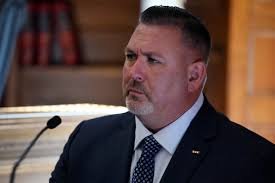
Before diving into the evidence, let’s get the basics straight. Brian Higgins is an agent with the Bureau of Alcohol, Tobacco, Firearms and Explosives (ATF). He’s a law enforcement professional who, in early 2022, was part of a social circle that included Karen Read and her boyfriend, Boston Police Officer John O’Keefe .
Here’s where things get complicated: Higgins wasn’t just an acquaintance. In the weeks before O’Keefe’s death, he and Read developed what can only be described as a flirtatious relationship. They exchanged texts, went on at least one date, and even shared a kiss . This connection would later become a cornerstone of the defense’s argument that O’Keefe’s death wasn’t what prosecutors claimed.
The Night Everything Changed: January 29, 2022
To understand Higgins’ role, you need to picture the scene. On the night of January 28, 2022, a group of friends gathered for drinks at a few bars in Canton, Massachusetts. The group included Karen Read, John O’Keefe, Brian Higgins, and Brian Albert (a Boston Police officer who owned the home at 34 Fairview Road) .
After leaving the final bar, the Waterfall Bar & Grille, the group headed to Albert’s home for an afterparty. What happened next is where the two versions of this story diverge entirely.
The prosecution’s version: Read dropped O’Keefe off outside Albert’s home around 12:30 a.m. After an argument, she backed her SUV into him, causing fatal injuries. She then left him to die in the snow.
The defense’s version: O’Keefe actually went inside Albert’s home. There, something happened—a fight, possibly involving the homeowner’s German Shepherd—that led to his death. Higgins, along with others, then allegedly moved O’Keefe’s body outside to make it look like a hit-and-run .
Higgins is central to this second theory. Why? Because the defense argues he had a motive to harm O’Keefe: jealousy.
The Text Messages That Changed Everything
Let’s talk about those texts. They’re the kind of messages you’d expect between two people testing the waters of a new relationship. But in this case, they’re evidence in a murder trial.
The text exchange between Karen Read and Brian Higgins began in earnest on January 16, 2022—just 13 days before O’Keefe’s death . The messages are flirtatious, intimate, and revealing. Here are some highlights:
January 16, 1:00 a.m.:
Read: “You’re hot”
Higgins: “Are you serious or messing with me?”
Read: “No I’m serious”
Higgins: “Feeling is mutual / Is that bad? / How long have you thought that???”
Later that same night, the conversation became more direct:
Read: “We kissed, right?”
Higgins: “Is this a trick question….”
The texts also reveal Read’s dissatisfaction with her relationship with O’Keefe. She mentioned feeling trapped, citing his jealousy and the challenges of helping raise his niece and nephew:
Read: “Because I went from being solo to trying to give attention to kids. Who aren’t mine. And I never wanted kids.”
In another exchange, Read hinted at deeper issues:
Read: “It is very very complicated. He and I dated when we were kids and then his sister died and everything got fucked up.”
Perhaps most striking is what Read said about O’Keefe hooking up with someone else during a New Year’s trip:
Read: “He hooked up w another girl on vacation.”
These texts serve two purposes, depending on who’s presenting them:
For the prosecution: They show Read was unhappy in her relationship, giving her a motive to want O’Keefe gone .
For the defense: They show Higgins was a romantic rival who had reason to be jealous of O’Keefe. If Higgins wanted Read for himself, the argument goes, he might have confronted—or worse, harmed—O’Keefe .
The Third-Party Culprit Theory
Here’s where the legal maneuvering gets fascinating. During Read’s trials, her defense team attempted to argue that Higgins and others—including Brian Albert and his nephew Colin Albert—could have been responsible for O’Keefe’s death. This is called a “third-party culprit” defense .
The strategy makes sense. If you can show someone else had motive and opportunity, you create reasonable doubt about your client’s guilt.
In the first trial, the defense spent considerable time suggesting that Higgins and Brian Albert could have killed O’Keefe during a fight inside the Canton home. They pointed to surveillance footage from the Waterfall bar showing what looked like tension between Higgins and O’Keefe .
But here’s the twist: In the second trial, Judge Beverly Cannone ruled that the defense hadn’t presented enough evidence to blame Higgins directly during closing arguments. She said the defense could argue that police failed to investigate Higgins properly, but they couldn’t explicitly claim he committed the murder .
That’s a significant limitation. It meant the jury heard about Higgins’ texts and his presence at the afterparty, but they weren’t told outright, “Higgins did it.”
The Surveillance Footage and Phone Records
Beyond the texts, other evidence raises questions about Higgins’ actions on the night of O’Keefe’s death.
Surveillance footage from the Waterfall bar shows Higgins gesturing aggressively toward O’Keefe. In the video, another patron grabs Higgins’ arm to restrain him . This suggests there was tension between the two men that night.
Then there’s footage from the Canton police station—where Higgins had an office—taken around 1:30 a.m. on January 29, about an hour after prosecutors say Read struck O’Keefe. In the video, Higgins is seen entering the station, retrieving an empty duffel bag and a garden hoe from his vehicle, and then leaving .
What was he doing? Higgins testified during the first trial that he went to the station to move cars due to the snowstorm. But the timing raises eyebrows, especially when combined with other evidence.
Phone records add another layer of intrigue. At 2:22 a.m., Brian Albert called Higgins. The call lasted just one second. Moments later, Higgins called Albert back, and that conversation lasted 22 seconds .
Both men initially said they didn’t remember the calls. Higgins suggested they might have been “butt dials.” But what are the odds of two butt dials in rapid succession between the same two people in the middle of the night?
The Aftermath: Civil Lawsuits and Defamation Claims
Here’s where the story takes an unexpected turn. After Karen Read was acquitted of murder in her second trial in June 2025, she didn’t just walk away. Instead, she filed a civil lawsuit against the witnesses from her case, including Brian Higgins .
Read’s lawsuit alleges that Higgins and others conspired to frame her for O’Keefe’s death. She’s seeking to hold them civilly liable for her arrest, prosecution, and the emotional distress she suffered .
But Higgins and the other “house defendants”—Brian Albert, Nicole Albert, Jennifer McCabe, and Matthew McCabe—aren’t taking this lying down. Their attorney has filed a motion to dismiss the lawsuit, calling it an “act of revenge” and “a work of conspiratorial fiction devoid of supporting evidence” .
The attorney argues that Read’s lawsuit violates Massachusetts’ anti-SLAPP statute, which protects people from lawsuits aimed at silencing them for exercising their right to petition the government (like speaking to police). They also argue that Read’s claims are time-barred because the statute of limitations has expired .
This civil battle adds another layer to an already complex case. While Read may have been acquitted of criminal charges, she’s now trying to hold those she believes wronged her accountable in civil court. Higgins and the others are fighting back, setting up a legal showdown that could drag on for years.
Why Higgins Matters: Two Sides of the Story
So what should you make of Brian Higgins’ role in this case? Let’s break it down by the two competing narratives.
The Prosecution’s View of Higgins
From the prosecution’s perspective, Higgins is essentially irrelevant to O’Keefe’s death. Yes, he exchanged flirty texts with Read. Yes, he was at the afterparty. But none of that proves he had anything to do with O’Keefe’s death.
Prosecutors point out that there’s no physical evidence linking Higgins to the crime. No DNA. No witnesses placing him near O’Keefe at the time of death. No confession or incriminating statements. They argue that Read’s own words—“I hit him”—combined with physical evidence from her SUV, tell the real story .
Sgt. Yuriy Bukhenik, one of the lead investigators, testified that he found no evidence Higgins had any motive to harm O’Keefe. When asked about the flirtatious texts, Bukhenik offered his interpretation: “My opinion is that it’s an angry girlfriend trying to set up a hookup to hurt John (O’Keefe)” .
In other words, Read was looking for a way out of her relationship, and Higgins was just a convenient distraction.
The Defense’s View of Higgins
The defense tells a very different story. They argue Higgins wasn’t just a random participant in the night’s events—he was a potential killer with motive and opportunity.
Think about it: Higgins had exchanged romantic messages with Read. He’d kissed her. He’d gone on a date with her. Then, on the night of January 28, he saw O’Keefe kiss Read at the Waterfall bar . Surveillance footage shows him gesturing aggressively toward O’Keefe. This wasn’t just a friendly night out; it was a powder keg.
Then there’s the timing of the phone calls. Why would Brian Albert call Higgins at 2:22 a.m.—and why would Higgins call back immediately—if both men were supposedly asleep? And why did Higgins dispose of his phone just months after O’Keefe’s death on a Cape Cod military base ?
Higgins’ explanation for disposing of the phone—that a target of one of his ATF investigations had called him—struck some observers as convenient. Combined with the flirtatious texts and the late-night calls, the defense argues, you have at least enough for reasonable doubt.
What the Jury Decided
In June 2025, a jury acquitted Karen Read of all charges related to O’Keefe’s death . That means they concluded the prosecution had not proved beyond a reasonable doubt that she was responsible for his death.
What role did Higgins play in that verdict? We can’t say for certain, but the fact that the defense successfully introduced his texts and raised questions about his behavior likely contributed to the jury’s doubt.
When you’re building a defense in a murder case, you don’t need to prove who did it. You just need to show the prosecution hasn’t proven their case. The texts between Read and Higgins, combined with the surveillance footage and phone records, gave the jury a plausible alternative narrative .
The Lingering Questions
Even with the criminal trial over, questions remain about Brian Higgins and his role in this case.
Why did Higgins dispose of his phone? His explanation about an ATF target finding his number might be legitimate. But the timing—just months after a high-profile death in which he was involved—raised red flags for many observers.
What was in the duffel bag? Surveillance footage shows Higgins retrieving an empty duffel bag from his vehicle around 1:30 a.m. What was he carrying? Where did it go?
What did Higgins and Brian Albert discuss in those 2:22 a.m. calls? Both men said they didn’t remember. But the timing—just before Jennifer McCabe’s infamous “hos long to die in cold” Google search—makes you wonder what they were coordinating.
Why did the prosecution decline to call Higgins as a witness in the second trial? In the first trial, Higgins testified. In the second, prosecutors left him off the witness list . Was that because his testimony could have opened doors the defense wanted to explore?
What’s Next for Brian Higgins?
As of early 2026, Higgins is one of the defendants in Karen Read’s civil lawsuit. He and the other “house defendants” are trying to have the case dismissed, arguing that Read’s claims are baseless and time-barred .
If the judge allows the lawsuit to proceed, Higgins could face discovery—meaning he might have to answer questions under oath about his actions on the night of O’Keefe’s death. That could unearth new evidence or testimony that wasn’t presented at the criminal trial.
For now, Higgins remains a polarizing figure. To some, he’s an innocent man caught up in a defendant’s desperate attempt to shift blame. To others, he’s a key piece of a puzzle that was never fully solved.
FAQs
1. Who is Brian Higgins in the Karen Read case?
Brian Higgins is an ATF agent who exchanged flirtatious text messages with Karen Read in the weeks before her boyfriend, John O’Keefe, died. He was present at the afterparty on the night of O’Keefe’s death and became a key figure in the defense’s theory that someone else killed O’Keefe .
2. What did the text messages between Karen Read and Brian Higgins say?
The texts included flirtatious exchanges where Read called Higgins “hot” and Higgins said he was attracted to her “from jump.” The messages also revealed Read’s dissatisfaction with her relationship with O’Keefe, including complaints about his jealousy and the challenges of raising his niece and nephew .
3. Why did the defense focus on Brian Higgins?
The defense argued that Higgins had a motive to harm O’Keefe because he was romantically interested in Read. They pointed to surveillance footage showing tension between Higgins and O’Keefe at a bar, as well as late-night phone calls between Higgins and Brian Albert around the time of O’Keefe’s death .
4. Was Brian Higgins ever charged with a crime?
No, Brian Higgins has never been charged with any crime related to John O’Keefe’s death. He testified in the first trial but was not called as a witness in the second trial .
5. What did the surveillance footage show Higgins doing?
Footage from the Canton police station showed Higgins arriving around 1:30 a.m. on the morning of O’Keefe’s death. He was seen retrieving an empty duffel bag and a garden hoe from his vehicle. Higgins said he was moving cars due to the snowstorm .
6. Why did Higgins dispose of his phone?
Higgins testified that he disposed of his phone on a Cape Cod military base a few months after O’Keefe’s death. He said a target of one of his ATF investigations had called him, so he got rid of the phone for security reasons .
7. What were the 2:22 a.m. phone calls between Higgins and Brian Albert?
Phone records showed a one-second call from Albert to Higgins at 2:22 a.m., followed by a 22-second call from Higgins to Albert. Both men initially said they didn’t remember the calls and suggested they might have been accidental “butt dials” .
8. Is Karen Read suing Brian Higgins?
Yes, after her acquittal, Read filed a civil lawsuit against Higgins and others, alleging they conspired to frame her for O’Keefe’s death. Higgins and the other defendants are trying to have the lawsuit dismissed .
Conclusion
The Karen Read case has everything: romance, jealousy, death, and competing narratives about what really happened on a snowy night in Canton. Brian Higgins sits at the center of it all—a federal agent whose flirtatious texts and mysterious actions on the night of O’Keefe’s death have fueled speculation for years.
What’s clear is that the jury didn’t find enough evidence to convict Karen Read. What’s less clear is whether Brian Higgins played a role in O’Keefe’s death or was simply a convenient suspect in a defense attorney’s alternative theory.
As the civil case moves forward, we might get answers to some of the lingering questions. Or we might be left with the same uncertainty that has defined this case from the beginning.
What do you think about Brian Higgins’ role in this case? Do the texts and surveillance footage raise legitimate suspicions, or is he just a scapegoat in a defense strategy that worked? Share your thoughts in the comments below.
About the Author