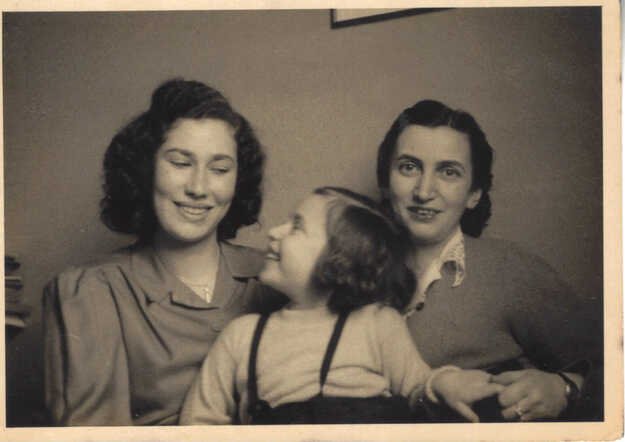
Have you ever wondered what it feels like to survive history? What happens to the people who lived through the darkest times of World War II? The story of Gabi Goslar helps answer these questions in a simple yet powerful way. Her life connects us to Anne Frank, one of the most famous voices of the Holocaust. But Gabi’s story stands on its own. It is a story of friendship, survival, loss, and hope.
In this article, we will explore who Gabi Goslar was, her childhood, her bond with Anne Frank, and what happened during and after the war. We will also look at why her story still matters today. Let’s begin this journey together.
Who Was Gabi Goslar?
Gabi Goslar was a German-born Jewish girl who became known as a close childhood friend of Anne Frank. She was born on October 12, 1928, in Berlin, Germany. Her full name was Gabrielle Goslar. Her family later moved to the Netherlands to escape Nazi rule.
Like many Jewish families, the Goslars left Germany because life had become unsafe. Adolf Hitler had come to power. Jewish people were losing their rights. Gabi’s father decided it was time to leave. This decision saved their lives, at least for a while.
In Amsterdam, Gabi started a new life. She went to school. She made friends. One of those friends was Anne Frank. At that time, they were just normal girls. They played games. They talked about school. They shared secrets. No one knew how history would later connect their names forever.
Gabi Goslar’s Childhood in Germany
Before moving to Amsterdam, Gabi Goslar lived in Berlin. Her early years were happy and peaceful. Her father worked as a journalist. He was also involved in public service. The family felt proud of their German roots.
However, things changed quickly when the Nazis rose to power in 1933. Anti-Jewish laws began to spread. Jewish children were treated differently. Jewish adults lost their jobs. Fear became part of daily life.
Gabi was still very young. Yet she could feel the tension around her. Her family understood that staying in Germany was too risky. Many families made the same choice. They packed their bags and left behind their homes.
Moving to the Netherlands gave the Goslar family hope. They believed Amsterdam would offer safety and peace. Sadly, this safety did not last long.
A New Beginning in Amsterdam
When Gabi Goslar arrived in Amsterdam, she began attending school in her new city. It was there that she met Anne Frank. Both girls had families who had fled Germany. They shared similar backgrounds. This helped them connect quickly.
Gabi once described Anne as lively and cheerful. Anne loved attention and enjoyed telling stories. Gabi was more serious and thoughtful. Their personalities were different. Still, they became close friends.
They spent time playing outside. They attended birthday parties. They talked about their dreams. At that moment, they were just children. The war felt far away.
Their friendship grew during these school years. Neither of them could imagine that soon their lives would be turned upside down by the Nazi occupation of the Netherlands in 1940.
The Friendship Between Gabi Goslar and Anne Frank
The friendship between Gabi Goslar and Anne Frank is one of the most touching parts of her life story. The two girls shared many everyday moments. They walked to school together. They visited each other’s homes. They laughed and sometimes argued, like all friends do.
Gabi later said that Anne liked to be the center of attention. She enjoyed acting and performing. Gabi was calmer and more reserved. This balance made their friendship special.
When Jewish children were forced to attend separate schools, both girls ended up at the Jewish Lyceum. Their circle of friends became smaller. Life became more restricted. Yet they still tried to enjoy normal childhood moments.
This friendship became even more meaningful after the war. Gabi became one of the last living people who could speak about Anne as a real friend, not just a famous writer.
The Nazi Occupation Changes Everything
In 1940, Germany invaded the Netherlands. Life for Jewish families quickly became difficult again. New laws limited where they could go. Jewish people had to wear yellow stars. They could not use public transport freely.
For Gabi Goslar, daily life became filled with fear. Families worried about deportation. People disappeared overnight. Anne Frank’s family went into hiding in 1942. Gabi did not know where they had gone.
Soon, Gabi and her own family faced arrest. In 1943, they were captured by the Nazis. They were sent to the Westerbork transit camp. Later, they were deported to the Bergen-Belsen concentration camp in Germany.
The safety they once found in Amsterdam had vanished. Survival became their only goal.
Life in Bergen-Belsen Camp
Bergen-Belsen was one of the harshest concentration camps. Food was scarce. Disease spread quickly. Many people died from hunger and illness.
Gabi Goslar was imprisoned there with her sister and father. The conditions were terrible. Yet even in that darkness, something unexpected happened. Gabi heard that Anne Frank was also in the camp.
The two friends were placed in different sections. A fence separated them. One day, they managed to speak to each other over the fence. Gabi later described that moment as painful and emotional.
Anne looked weak and sick. Gabi tried to throw food over the fence to help her friend. Sadly, Anne Frank did not survive the camp. She died in early 1945, shortly before liberation.
Gabi survived. That survival carried both relief and heavy sadness.
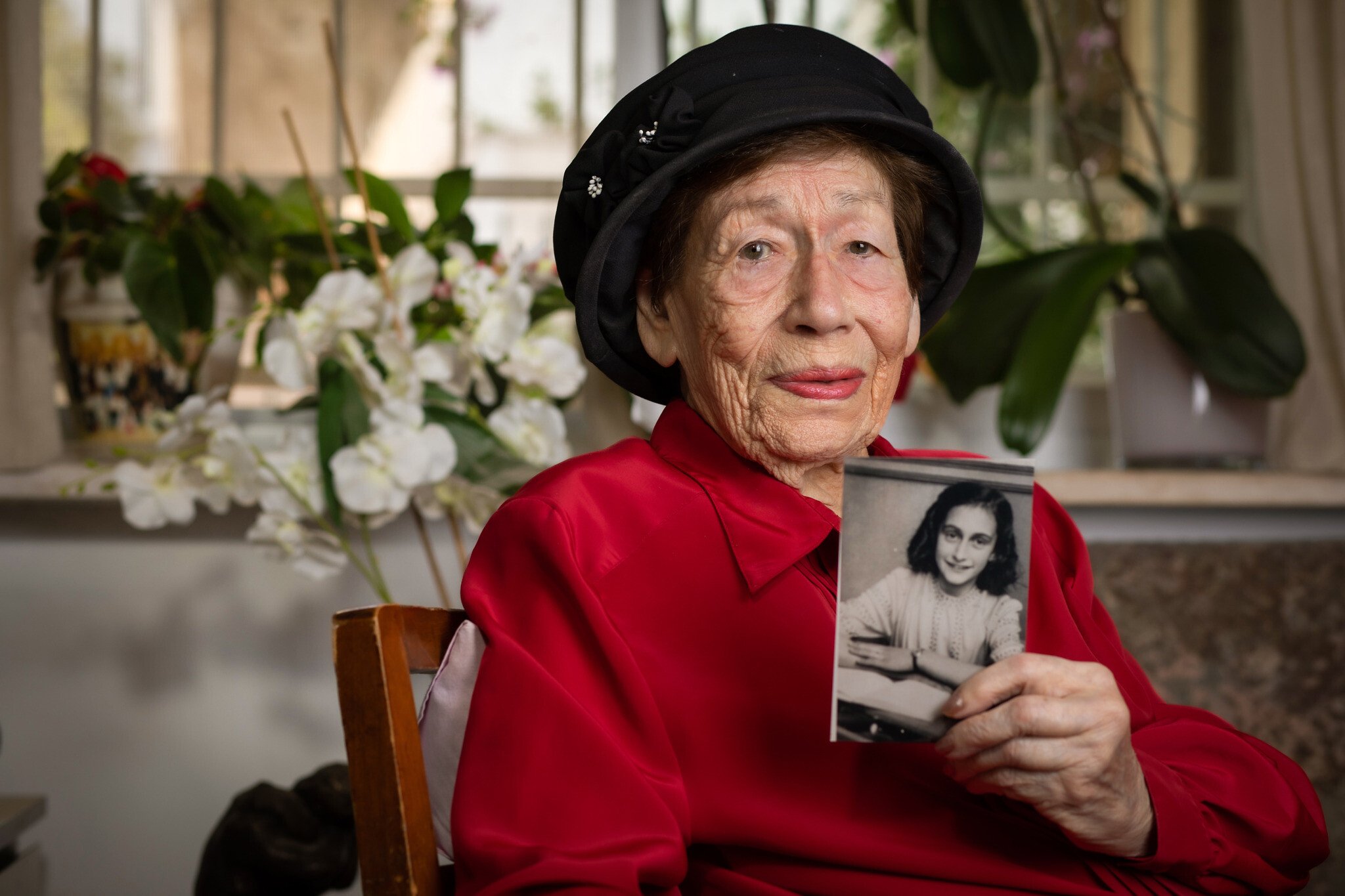
The Loss of Family and Survival
Surviving the Holocaust did not mean life became easy. Gabi Goslar lost her mother before the war. During the Holocaust, she also lost many relatives and friends. The pain of these losses stayed with her forever.
When the war ended, Gabi and her sister were among the survivors of Bergen-Belsen. They were freed by British troops in April 1945. Many survivors were weak and ill. Recovery took time.
After the war, Gabi reunited with her father. Together, they tried to rebuild their lives. They later moved to Israel, which became her new home.
Survival gave Gabi a second chance. Yet she carried the memories of those who did not survive, including Anne Frank.
Life After the War
After settling in Israel, Gabi Goslar built a new life. She got married and had children. She became a nurse and worked in hospitals. Her daily work focused on caring for others.
Even while building her future, she never forgot the past. She often spoke about her experiences. She believed it was important to educate young people about the Holocaust.
Gabi understood that as survivors grew older, fewer witnesses remained. She felt a duty to tell the truth. Her voice became a bridge between history and new generations.
Her life after the war shows strength and resilience. She did not allow hatred to define her future. Instead, she chose to focus on family, service, and education.
Why Gabi Goslar’s Story Matters Today
The story of Gabi Goslar matters because it gives us a human view of history. We often read about numbers and dates. But stories like hers remind us that real people lived through these events.
Her friendship with Anne Frank makes history personal. Through Gabi’s memories, we see Anne not only as a famous writer but as a playful schoolgirl.
Gabi’s survival also teaches us about resilience. She faced fear, hunger, and loss. Yet she continued living with courage.
In today’s world, where misinformation spreads easily, first-hand testimonies are precious. They protect truth. They help fight denial. They remind us why tolerance and respect matter.
Her life is not just about tragedy. It is also about hope and responsibility.
Personal Reflections on Gabi Goslar’s Legacy
When I think about Gabi Goslar, I feel both sadness and admiration. It is hard to imagine being a child during such terror. Yet she found the strength to survive and later speak about it.
Her story teaches us that friendship can shine even in dark times. The image of two girls speaking over a camp fence is heartbreaking. Still, it shows the power of human connection.
I also believe her life teaches courage. It takes bravery to revisit painful memories. Sharing those memories helps others learn.
We cannot change history. But we can choose how we remember it. By listening to survivors like Gabi, we honor those who were lost.
Frequently Asked Questions (FAQs)
1. Who was Gabi Goslar?
Gabi Goslar was a childhood friend of Anne Frank. She was a Holocaust survivor who later lived in Israel.
2. How did Gabi Goslar know Anne Frank?
They met at school in Amsterdam after both families fled Germany. They became close childhood friends.
3. Did Gabi Goslar see Anne Frank during the war?
Yes. They briefly spoke to each other over a fence at the Bergen-Belsen concentration camp.
4. Did Gabi Goslar survive the Holocaust?
Yes, she survived Bergen-Belsen and was liberated in 1945.
5. What did Gabi Goslar do after the war?
She moved to Israel, became a nurse, married, and raised a family.
6. Why is Gabi Goslar important in history?
Her testimony provides real insight into Anne Frank’s life and the experiences of Holocaust survivors.
Conclusion: A Story We Must Never Forget
The life of Gabi Goslar is a powerful reminder of both human cruelty and human strength. She lived through one of the darkest times in history. She lost friends and family. Yet she survived and chose to speak.
Her friendship with Anne Frank connects us to history in a personal way. It reminds us that behind every famous diary or history book lies a real person with real emotions.
About the Author