Introduction
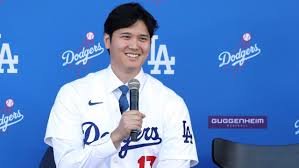
Let’s be honest. When you first heard about Shohei Ohtani’s new deal with the Los Angeles Dodgers, your jaw probably hit the floor. $700 million over ten years. That number sounds fake, right? It is the largest contract in professional sports history. But here is where it gets weird. Most people don’t realize that Ohtani will only take home a tiny fraction of that money each season. This is where the real Ohtani contract breakdown gets fascinating. You need to understand how this deal actually works. Because on the surface, it looks like a simple record breaker. But underneath, it is a financial masterpiece. In this article, we will walk through every single detail. You will learn why Ohtani agreed to this structure. You will see how the Dodgers plan to build a dynasty around him. And you will understand why this changes baseball forever. Grab a coffee. Let’s dig in.
Why the Ohtani Contract Breakdown Matters to You
You might not play for the Dodgers. You probably don’t have $700 million in your bank account. So why should you care about this deal? Because it changes how every team will approach superstars going forward. It also affects the competitive balance of Major League Baseball. If you are a fan of any team, this matters. The Ohtani contract breakdown is a case study in creative accounting. It shows you how smart people can bend the rules without breaking them. Plus, it is just fun to understand how a two way superstar gets paid like a small country.
Think of it this way. You have probably heard of deferred money in normal jobs. Maybe your company puts part of your bonus into a retirement account. Ohtani just did that on steroids. And we mean that literally. This deal is less about yearly cash flow and more about long term trust. It is also a huge bet on Ohtani’s brand. By the end of this breakdown, you will see why both sides won.
The Simple Numbers Behind the $700 Million
Let us start with the basic math. The contract runs from 2024 through 2033. Ohtani will be with the Dodgers for ten seasons. The total guaranteed money is $700 million. That averages out to $70 million per year. On paper, that smashes the previous MLB record. Mike Trout’s deal was $426.5 million. So yes, this is historic.
But here is the catch. Ohtani will only receive $2 million per year during those ten seasons. That is right. Two million dollars. For the best baseball player on the planet. For context, there are dozens of players making more than that right now. The rest of his money, $680 million, is deferred. He will collect that amount without interest from 2034 to 2043.
Let me pause here. When I first read that, I thought it was a typo. It is not. Ohtani essentially gave the Dodgers a massive loan. He is betting that he will be fine on $2 million a year now. And in return, he gets long term financial security and a chance to win championships.
Breaking Down the Deferred Structure
This is the heart of the Ohtani contract breakdown. Deferred compensation is not new in baseball. Bobby Bonilla Day is a famous example. But no one has ever done it on this scale. Here is how it works in plain English.
Each year from 2024 to 2033, Ohtani plays baseball. The Dodgers pay him $2 million. That covers his living expenses and then some. The other $68 million per year goes into a figurative piggy bank. But Ohtani does not see that money yet. Starting in 2034, one year after the contract ends, the Dodgers will start paying him the deferred amount. They will pay $68 million per year for ten years. So from age 40 to 50, Ohtani will collect $68 million annually.
But wait. There is no interest on that deferred money. That is the shocking part. Normally, if you defer payment, you get interest as compensation for waiting. Ohtani said no to interest. He simply wants his $680 million later. In today’s dollars, that money is worth much less due to inflation. Financial experts estimate the present value of the contract is around $460 million. That is still massive. But it is not $700 million.
Why would Ohtani do this? He reportedly wanted the Dodgers to have financial flexibility. He wants to win. By taking almost nothing now, the Dodgers can sign other stars. And they already have. They added Yoshinobu Yamamoto for $325 million. They traded for Tyler Glasnow. Ohtani’s sacrifice directly built a superteam.
How the Dodgers Benefit from This Deal
From the Dodgers’ perspective, this is a dream. They get the best player in the world for $2 million per year in cash flow. That is less than they pay many bench players. The luxury tax calculation is a bit different. MLB uses the average annual value for competitive balance tax purposes. But because of the deferrals, the tax hit is only about $46 million per year. That is still high. But it is far lower than $70 million.
Let me explain why that matters. Every team has a budget. The Dodgers have a huge budget, but they still have limits. By lowering Ohtani’s luxury tax number, they create room to add more talent. They can spend on pitching, which they desperately need. They can extend their homegrown stars. The deferrals essentially give them a cheat code.
Also, the Dodgers make a fortune off Ohtani right now. Jersey sales, ticket sales, Japanese sponsorships, and TV ratings all skyrocketed the moment he signed. They are collecting that revenue today. But they do not have to pay his real salary until a decade from now. That is incredible business. You would do the same thing if you could.
Ohtani’s Perspective: Why Take Deferred Money?
You might be thinking, “Is Ohtani crazy?” Why would anyone leave $680 million on the table for a decade? There are several reasons. First, Ohtani already makes an enormous amount off the field. His endorsement income is estimated at $40 to $50 million per year. That comes from brands like New Balance, Fanatics, and many Japanese companies. So his $2 million from the Dodgers is just pocket change.
Second, Ohtani genuinely wants to win. He spent six years on losing Angels teams. He never played a single playoff game. That frustrated him. By deferring his salary, he gave the Dodgers the ammo to build a winner. And it worked immediately. The Dodgers won the World Series in 2024. Ohtani got his ring. You cannot put a price on that.
Third, Ohtani trusts the Dodgers’ ownership. The Guggenheim Partners group is incredibly wealthy. They are not going bankrupt. He will get his money. Plus, he might avoid some California taxes by taking the money later if he moves to a tax free state after retirement. That is speculation, but it is possible.
From a human perspective, Ohtani seems to care more about legacy than cash. He loves baseball. He wants to be remembered as a champion. This contract structure proves that.
The Risks for Both Sides
No deal is perfect. The Ohtani contract breakdown would be incomplete without discussing risks. For the Dodgers, the biggest risk is injury. Ohtani already had two elbow surgeries. He will not pitch in 2024 as he recovers. What if he never pitches at the same level again? What if he stops being a two way player? Then the Dodgers are paying $700 million for a designated hitter. That is still a great hitter. But it is not the same value.
Also, the deferred money will eventually come due. From 2034 to 2043, the Dodgers will pay $68 million per year to a retired player. That could hurt their ability to sign free agents in that decade. They are betting that revenues will grow enough to absorb it. That is a safe bet given baseball’s rising revenues. But it is still a bet.
For Ohtani, the risk is inflation. $680 million in 2043 will not buy what $680 million buys today. Historically, inflation averages about 2 to 3 percent per year. Over 20 years, that is a significant loss of purchasing power. He also risks the Dodgers’ ownership changing. What if the team is sold to less wealthy owners? The contract is guaranteed, so he will still get paid. But it could become a legal headache.
There is also the opportunity cost. If Ohtani had taken $70 million per year now, he could invest that money himself. He could buy real estate, stocks, or start a business. By deferring, he loses all that potential growth. He is leaving hundreds of millions on the table in terms of investment returns. That is a massive sacrifice.

Comparing to Other Mega Deals in Sports
To really understand this contract, you need to compare it. Patrick Mahomes signed a 10 year extension with the Kansas City Chiefs worth $450 million. That deal also had deferrals and creative structures. But Mahomes gets more cash flow earlier. His present value is higher relative to the headline number.
In baseball, Mike Trout’s $426.5 million deal pays him over $35 million per year in cash. No massive deferrals. Mookie Betts got $365 million from the Dodgers with some deferrals, but nothing like Ohtani. Juan Soto reportedly turned down $440 million from the Nationals. He wanted more money sooner.
So Ohtani’s deal is unique. It is the largest total value ever. But it is not the largest present value. That distinction likely belongs to Trout or maybe Soto’s next contract. What Ohtani did was trade present cash for future cash and team success. No superstar has ever done that to this extreme.
Think of it as the ultimate team friendly deal disguised as a record breaker. The headline says $700 million. The reality is much different. And that is why every front office is studying this contract right now.
What This Means for Future MLB Contracts
You can expect other players to start asking for deferred money structures. But probably not to this extent. Ohtani is unique because of his endorsement income. Most players need their salary to live on. They cannot afford to take $2 million per year. So the Ohtani contract breakdown is not a blueprint for everyone. It is a blueprint for superstars with massive off field earnings.
However, teams will absolutely try to push for deferrals. They will point to Ohtani as an example. “If he can do it, why can’t you?” Agents will fight back. They will demand interest on deferred money. The next big free agent, like Juan Soto in 2024 or Vladimir Guerrero Jr. later, will have interesting negotiations.
Also, MLB might step in. The league has rules against excessive deferrals. They want competitive balance. If every rich team starts deferring everything, small market teams will cry foul. For now, the Ohtani deal was approved. But do not be surprised if the next Collective Bargaining Agreement addresses this. There could be a cap on deferred money or a higher luxury tax calculation.
From a fan perspective, you should be excited. This deal allowed the Dodgers to build a juggernaut. But it also sets a dangerous precedent. The rich get richer when they can manipulate cash flow. Small market teams cannot afford to defer $680 million because they do not have the future revenue guarantees. So the gap between the haves and have nots might grow.
Personal Insight: What I Would Do
If you asked me, I would have taken the money now. I am not Shohei Ohtani. I do not make $50 million a year in endorsements. For a normal person, deferring that much wealth is insane. But Ohtani is not normal. He lives a quiet life. He does not spend lavishly. His reported happiness comes from baseball, not cars or houses. So for him, the deal makes sense.
I also admire the trust he placed in the Dodgers. In a world where athletes often chase every dollar, Ohtani took less to win. That is rare. LeBron James did something similar in Miami and Cleveland. Tom Brady did it for years in New England. When you are already rich, legacy matters more. Ohtani is building a legacy that will outlast his bank account.
But I would still advise any young player to be careful. Do not assume you will have Ohtani’s endorsement earnings. Do not assume the team will stay healthy or competitive. Get your money as soon as you can. The future is not guaranteed. Ohtani is the exception, not the rule.
Common Questions People Ask About the Deal
You probably have questions. Let us answer a few right here in the flow of the article.
Does Ohtani get any signing bonus? No. The contract has no reported signing bonus. Just the $2 million annual salary plus deferred payments.
Can the Dodgers trade Ohtani? Technically yes, but realistically no. He has full no trade clauses in most scenarios. He chose the Dodgers. He will stay a Dodger.
What if Ohtani retires early? If he retires before 2034, he likely forfeits some deferred money. The contract details are private, but standard MLB deals require you to fulfill the playing years to get deferred compensation.
How does this affect the luxury tax? MLB calculates the tax hit using the present value. That is around $46 million per year. The Dodgers pay tax on that amount, not $70 million.
Is this the biggest contract in sports history? In total value, yes. But Patrick Mahomes’ deal has more guaranteed money at signing when adjusted for present value. It depends on how you measure.
The Media Reaction and Fan Sentiment
When news broke, social media exploded. Some fans called Ohtani a genius. Others said he was stupid for leaving money on the table. Dodgers fans celebrated. Angels fans cried. Baseball writers praised the creativity but worried about competitive balance.
I remember scrolling through Twitter that night. Half the posts were memes about Bobby Bonilla. The other half were serious financial analyses. It was chaos. But over time, the narrative settled. Most people now see the deal as a win win. Ohtani gets his ring and his money eventually. The Dodgers get their dynasty. And baseball gets a fascinating storyline for the next two decades.
The negative sentiment came from fans of small market teams. They argued that deferrals are a loophole for rich teams. They are not wrong. But the rules allowed it. So you cannot blame the Dodgers for playing smart. You can only blame MLB for not closing the loophole sooner.
Frequently Asked Questions
1. What is the total value of Shohei Ohtani’s contract with the Dodgers?
The total value is $700 million over 10 years from 2024 to 2033.
2. How much does Ohtani get paid each year during the contract?
He receives only $2 million per year during the 10 playing seasons.
3. When does Ohtani receive the deferred $680 million?
He will receive $68 million per year from 2034 to 2043 with no interest.
4. Why did Ohtani agree to so much deferred money?
He wanted the Dodgers to have payroll flexibility to sign other star players and build a winning team.
5. What is the present value of Ohtani’s contract?
Financial experts estimate the present value at approximately $460 million due to inflation.
6. How does the contract affect the Dodgers’ luxury tax?
MLB uses the present value for tax purposes, so the Dodgers are taxed on about $46 million per year.
7. Can Ohtani opt out of the contract early?
No. The contract does not include any opt out clauses. He is committed for all 10 years.
8. What happens if Ohtani gets injured and cannot play?
The contract is fully guaranteed. He gets his money regardless of injury, assuming he does not retire early.
Conclusion: A Deal for the Ages
So here is the final Ohtani contract breakdown. You have a $700 million headline that is really a $460 million present value deal. You have a player taking $2 million a year to help his team win. You have a franchise building a superteam around a once in a century talent. And you have a future where deferred money becomes a major topic in every negotiation.
What does this mean for you as a fan? It means you get to watch one of the greatest players ever compete for championships. It means you will see copycat deals in the coming years. And it means you have a new standard for what “team friendly” really looks like.
Do you think this deal will work out for both sides? Or will the deferred money come back to haunt the Dodgers? Share your thoughts with a friend who loves baseball. And keep watching Ohtani. History is happening right in front of you.
About the Author